A painted face can be easy to recognize and harder to read. Bob Marley murals in Jamaica bring a familiar image into streets and neighborhoods, where its meaning depends on the surrounding place as much as the portrait itself. Some paintings invite a closer look at artistic choices. Others raise questions about memory, identity, and the relationship between a public figure and a community. For someone looking for murals rather than a general Marley itinerary, the distinction matters. A painting on a wall, a statue, and a museum each offer a different kind of encounter. It also matters whether an image is a current work that can be visited or a photograph documenting a wall as it once appeared.
Where to See Bob Marley Murals in Jamaica
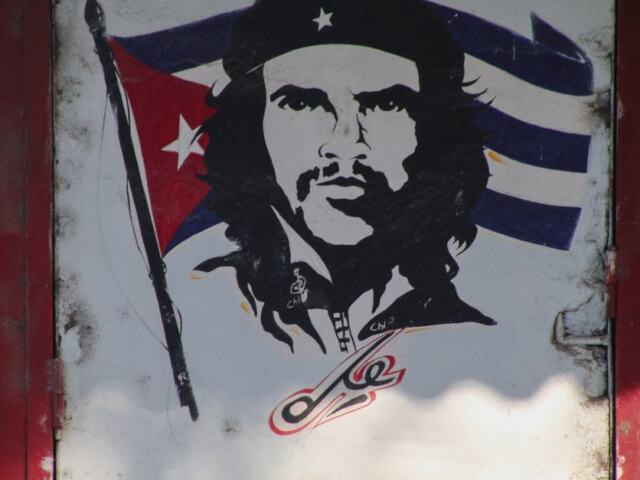
Kingston is the clearest starting point. Images of Marley’s dreadlocked face are common across the city, according to Rough Guides. That description establishes a citywide presence, not a fixed list of paintings. A wall can change: a work may be repainted, covered, or removed, while a photograph of it continues to circulate. Before setting out for a particular portrait, check whether the account showing it gives a street-level location and when that account was made. An image captioned only “Kingston” is useful evidence that a mural existed, but not a dependable set of directions.
For that reason, a reader looking at murals in Kingston Jamaica should distinguish a documented area from a verified individual wall. Kingston provides a useful setting for looking at Marley portraits, but a specific image needs a current location before it becomes a reliable stop. If a recent source identifies a wall, note the surrounding landmarks as well as the portrait; a close-up photograph may leave out the details needed to recognize the site. Paintings seen only in old photographs are better treated as records of street art than as directions.
Trench Town offers a different frame for looking. Marley was born in Nine Mile in north Jamaica and moved to Kingston’s Trench Town as a boy after his father died, as Rough Guides reports. Those places help explain why a Marley image may carry different associations depending on where it appears. A portrait encountered in a place connected to his life may prompt questions about local memory that the same image elsewhere would not. Neither connection, however, proves that a particular mural can currently be found in Nine Mile or Trench Town. Biographical significance and a confirmed mural location are separate claims.
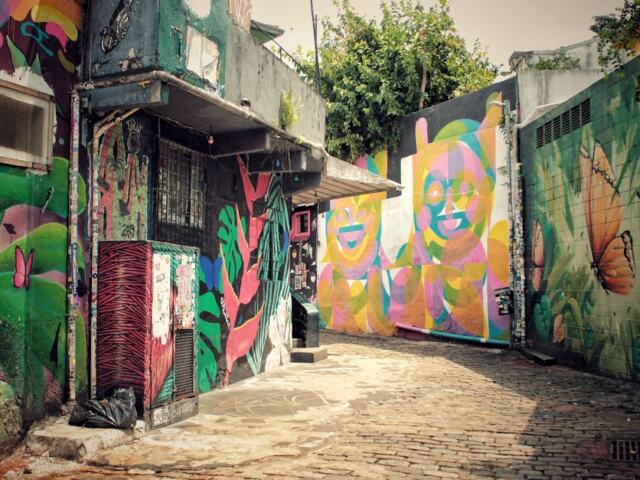
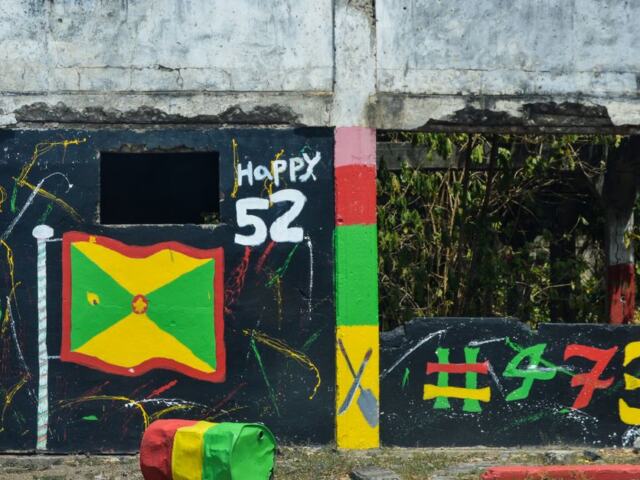
The broader subject is street art in Jamaica, not a single permanent collection. Looking beyond the likeness allows the reader to notice the wall, its surroundings, any accompanying text, and whether other figures share the composition. Scale makes a difference: a face filling a wall has a different effect from a small portrait among several subjects. So does placement. Lettering, neighboring images, and the way the painting fits the surface can all be part of the work, rather than incidental background to a photograph of Marley.
Why Is Marley Painted So Often on Jamaican Walls?
A Marley portrait can communicate a subject quickly. The face, hair, and familiar pose give a painter a recognizable starting point, even when the work is seen briefly. That recognizability helps explain why his image works in public art, where a viewer may encounter a painting in passing rather than spend time studying it. Recognition, though, is only the beginning of interpretation. A close portrait directs attention toward the individual. A painting that places him beside other faces may ask the viewer to think about relationships and shared cultural memory instead. Even two portraits of the same person can tell different visual stories through expression, color, and the amount of space given to the surrounding scene.
The setting changes the reading, too. In a neighborhood wall painting, Marley can appear as part of everyday surroundings rather than as a figure set apart by a formal display. A mural can hold pride, remembrance, or an artistic response to the place around it. Those are possible readings of an image, not motives that should be assigned to an unnamed painter without evidence. It helps to separate three questions: what the painting shows, what a viewer takes from it, and what the artist intended. The first can be described by looking closely; the last may remain unknown unless the artist has explained the work.
Rastafari also calls for care. A viewer may associate aspects of Marley’s image with Rastafari, but a portrait alone does not explain a painter’s beliefs or the intended message of a wall. Color, symbols, words, and neighboring figures deserve attention before anyone treats the painting as a statement about a religious or cultural tradition. Even then, the artist’s own explanation would offer firmer ground than a viewer’s assumption. Describing a visible detail is more precise than treating every familiar color or hairstyle as proof of a particular message.
The same restraint applies to politics. A public figure painted on a wall may appear in a work about remembrance or collective identity, but subject matter alone does not settle the meaning. For context on how such readings differ, the reader can consider political murals Jamaica. The strongest interpretation starts with what is visible and leaves room for what remains unknown. If the wall includes a slogan or additional portraits, those elements may change how the Marley image reads; if it does not, the viewer should not supply a message on the painter’s behalf. That approach takes the artwork seriously without making a wall carry a meaning no one has established.
Which Marley Murals Are Easy to Visit?
No individual Marley mural in the available sourced information comes with a verified current location and access details. An answer that names an easy mural stop would therefore promise more than the evidence supports. For a reader planning around a particular painting, the practical question is whether a recent, credible account identifies the wall and confirms that the artwork is still there. A photograph without that context is not enough. It also helps to distinguish visibility from access: an artwork visible from a public street is not the same as permission to enter a property or move closer to a wall. Treat uncertain locations as possibilities to check, not guaranteed stops.
There is a sourced option for seeing murals without relying on an unverified Marley wall. The Kingston Creative Sounds of the City tour is a three-hour guided experience covering Downtown murals, according to the Jamaica Tourist Board. Its description does not establish that a particular Marley portrait is included. The value for this purpose is the focus on mural viewing, with the subjects of individual works left open. Someone whose main goal is a Marley painting should confirm the current route and ask whether one is included before treating the tour as a Marley-specific outing.
The Bob Marley Museum belongs in a different category. It stands on the site of Marley’s former home, which he bought in 1975, and the house remained his home until his death in 1981, according to the Bob Marley Museum. A visit there can provide context for the person depicted in paintings. It should not be mistaken for confirmation of a nearby mural or presented as a substitute for seeing street art. The distinction is useful when planning limited time: a museum visit is centered on a biographical site, while mural viewing depends on locating works that may change.
Trench Town Culture Yard is likewise a place for context rather than a verified mural address. It includes the room where Marley slept and his mother’s former home. A statue of Marley also stands there, as the Jamaica Tourist Board states. A statue and a wall painting can both honor a figure, but they are different works in different settings. Keeping those categories separate makes a mural search more accurate. It also leaves room to appreciate each on its own terms: the Culture Yard helps a visitor understand a connection to place, while a mural asks for attention to a particular painted surface and its surroundings.
Are There Murals of Other Reggae Artists?
Marley is not the only possible subject when people look at Jamaican music through street art. Still, the available sources here do not verify a current mural of another named reggae artist. Naming one, assigning an artist to a painting, or giving directions to it would turn an appealing possibility into an unsupported fact. That does not mean a visitor should look only for Marley. It means a guide to specific works needs the same current evidence for every named subject, however familiar a face may seem.
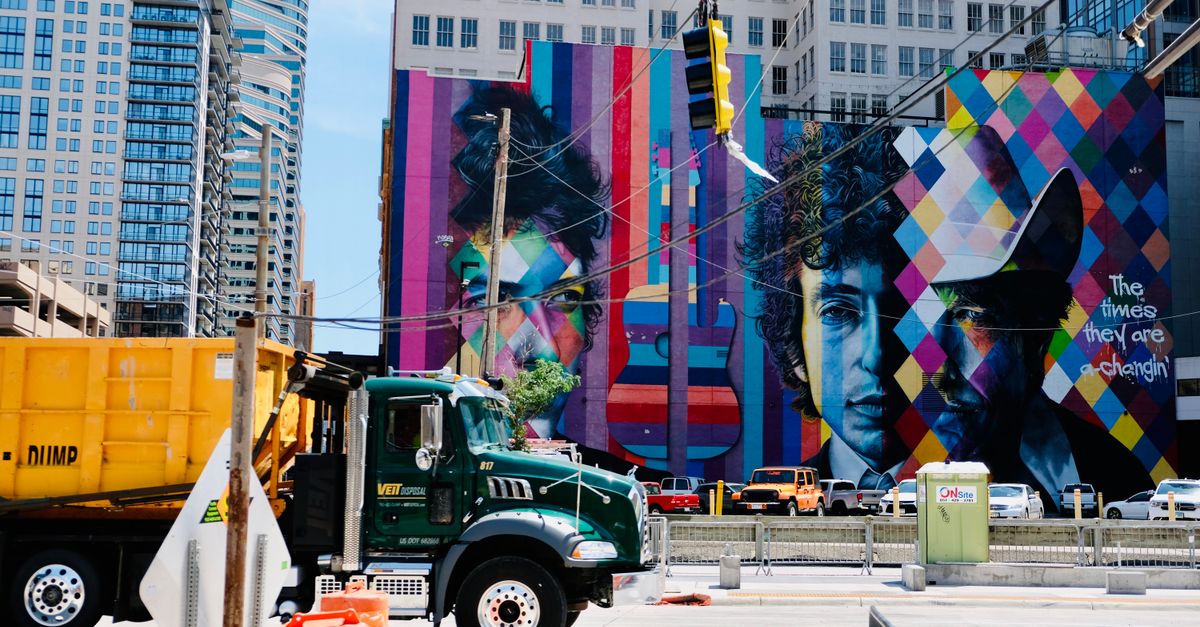
That limit need not narrow the way a reader looks at a wall. A group portrait asks different questions from a single Marley image. Which figures have been given space? Are names or lyrics painted beside them? Does the composition connect the people shown, or does it place one figure at the center? Such details can help a viewer describe what the work actually presents before trying to identify every face. Lettering may make an identification straightforward; without it, the relationship among the figures can still be worth observing even if their names remain uncertain.
Identification matters because resemblance is not attribution. A photograph might show a figure that looks like a known performer, but a name in the painting or a credible account of the work would make the identification more dependable. The same standard applies to mural artists. If a painter has not been publicly credited in a reliable source, the artwork should not be assigned to one on the strength of a social post or an unsigned image. It is possible to credit a painting as artist unknown while still describing its subject and visual choices carefully.
A useful account of a music mural can remain precise even when some names are unknown. It can describe the figures, lettering, colors, and relationship to the surrounding wall without guessing at the painter’s intent. Marley may be the reason someone first stops to look. Careful attention to the rest of the painting is what keeps the work from becoming only a recognizable face. For anyone seeking Bob Marley murals in Jamaica, that attention—and a check that a particular wall is still there—makes the difference between an interesting image and a worthwhile visit.